The Content Bottleneck: When Growth Outpaces Process
For many scaling businesses, content creation starts as a simple, manual task. A marketer writes a blog post, a designer makes an image, and someone hits ‘publish’. But as ambitions grow—more channels, more formats, more frequency—this ad-hoc approach collapses under its own weight. Teams find themselves juggling a dozen different tools: project boards for planning, separate docs for writing, design software for graphics, and multiple platforms for distribution. The result isn’t just inefficiency; it’s a critical business risk. Missed deadlines, inconsistent branding, duplicated efforts, and an inability to measure what’s actually working become the norm. The core problem is a lack of a unified system. You have activities, but not an automated pipeline.
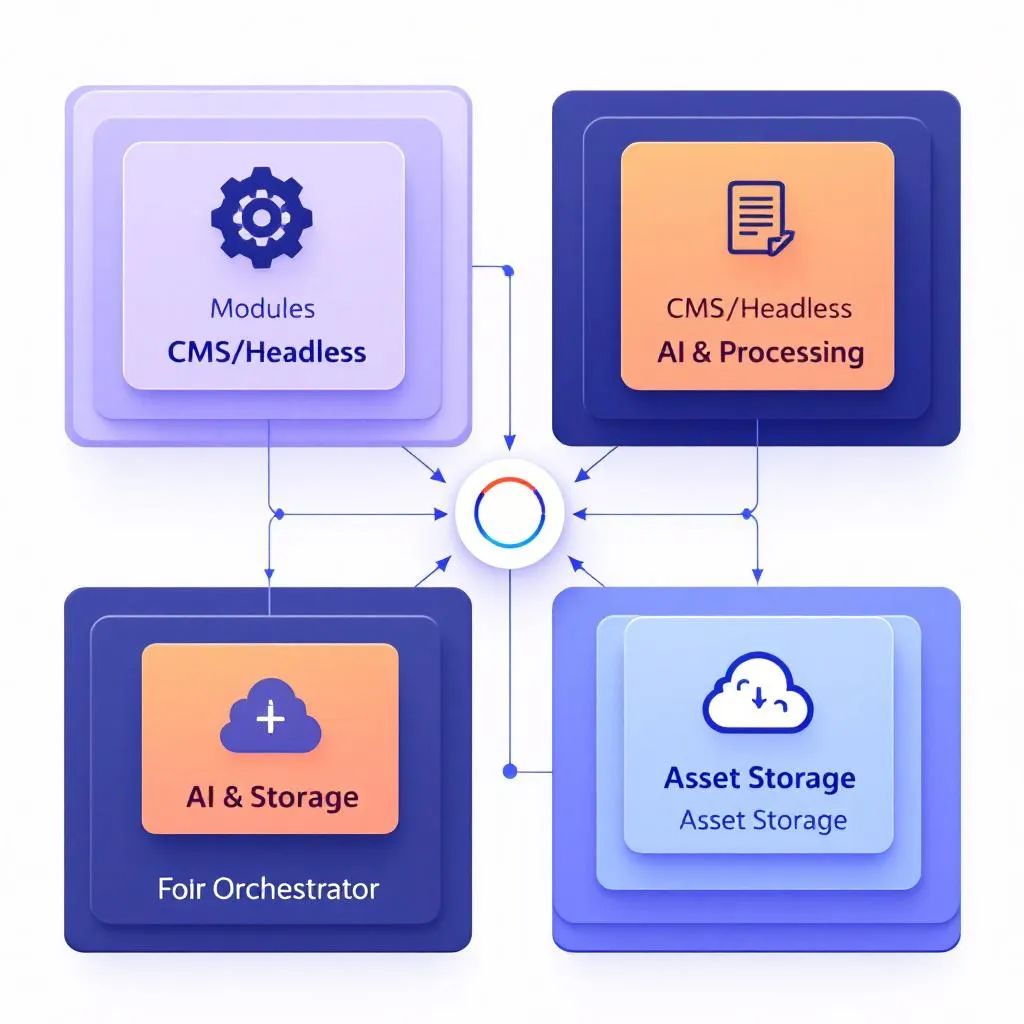
This is where a deliberate, automated content pipeline becomes a strategic asset. It’s not about replacing human creativity but about removing the repetitive friction that surrounds it. The goal is to create a predictable, scalable flow where ideas reliably transform into published, high-quality content across all your channels. The solution lies in moving from a collection of disconnected point solutions to an integrated, orchestrated system.
Architecting Your Pipeline: The Core Components
Think of your pipeline as a factory floor for content. Every factory needs a logical layout, defined stations, and a system to move work between them. Your digital pipeline requires the same. We can break it down into four essential, interconnected layers:
- The Orchestrator: This is the brain of the operation. It’s a central workflow engine (often built with tools like n8n, Make, or custom scripts) that triggers processes, moves data between apps, and enforces business rules. It decides what happens when.
- The Content Hub: This is your single source of truth, typically a Headless CMS or a structured database. Every piece of content, in every stage of its lifecycle, lives here. This eliminates version chaos and ensures everyone works from the same draft.
- The Enhancement Layer: This is where AI and automated processing add value. It includes services for generating images from prompts, checking grammar, optimizing SEO metadata, reformatting text for different platforms, or translating content.
- The Distribution Network: This comprises all the endpoints: your blog, email service, social media schedulers, and third-party platforms. The pipeline doesn’t just create content; it reliably ships it to the right destinations.
The magic happens in the connections between these layers. A change in the CMS can automatically trigger a new image generation, which then updates the draft and notifies an editor.
Mapping the Flow: From Idea to Publication
With the components defined, we need to chart the step-by-step journey a piece of content takes. This linear flow brings clarity and exposes automation opportunities.

- Trigger & Plan: The pipeline is initiated. This could be a scheduled date from a content calendar, a new row added to a planning spreadsheet, or a manual request from a team member. The orchestrator captures this intent and creates a structured ‘job’ in the Content Hub.
- Draft & Create: Core content is assembled. A writer might be assigned to flesh out an outline in the CMS. Simultaneously, the orchestrator can kick off parallel tasks, like using an AI image model to create a header graphic based on the article’s topic brief.
- Enhance & Process: The raw draft is enriched. Automated checks run for readability and SEO. The graphic is resized into the three required formats for web, email, and social. A short social post is auto-generated from the article summary.
- Review & Approve: The polished package is routed for human sign-off. Notifications are sent to editors, and the content is locked from further automated changes until approval is given in the system. This gate ensures quality control.
- Publish & Distribute: Upon approval, the final go-live sequence executes. The article is published via the CMS API, the email is queued in the marketing platform, and the social posts are scheduled. Analytics tracking is attached, closing the loop.
Getting Started: Your Implementation Roadmap
Building this pipeline is an iterative process. Don’t try to automate everything on day one. Start small, prove value, and expand.
Phase 1: Foundation. Choose your central Content Hub (even a well-structured Airtable or Notion database can start). Identify your most painful manual task—perhaps it’s social media image creation. Use an orchestrator to connect your idea doc to an AI image service and save the result back. Celebrate one automated step.
Phase 2: Integration. Connect your primary destination, like your blog CMS. Automate the entire flow for one content type. A new entry in the planning sheet triggers a draft doc, pulls in a generated image, and formats the final post for the CMS, waiting for review. You now have a minimal viable pipeline.
Phase 3: Scale & Optimize. Add more channels (email, LinkedIn). Incorporate more enhancement steps (translation, audio snippets). Implement error logging and alerting for failed jobs. Use the data from your pipeline to analyze bottlenecks and cycle times.
The ultimate benefit of this automated pipeline is not just time saved. It’s strategic clarity. It transforms content from a chaotic, reactive cost center into a measurable, reliable engine for growth. You gain the capacity to experiment with new formats and channels because the underlying machinery is robust and repeatable. You stop managing tasks and start managing a system that works for you.